

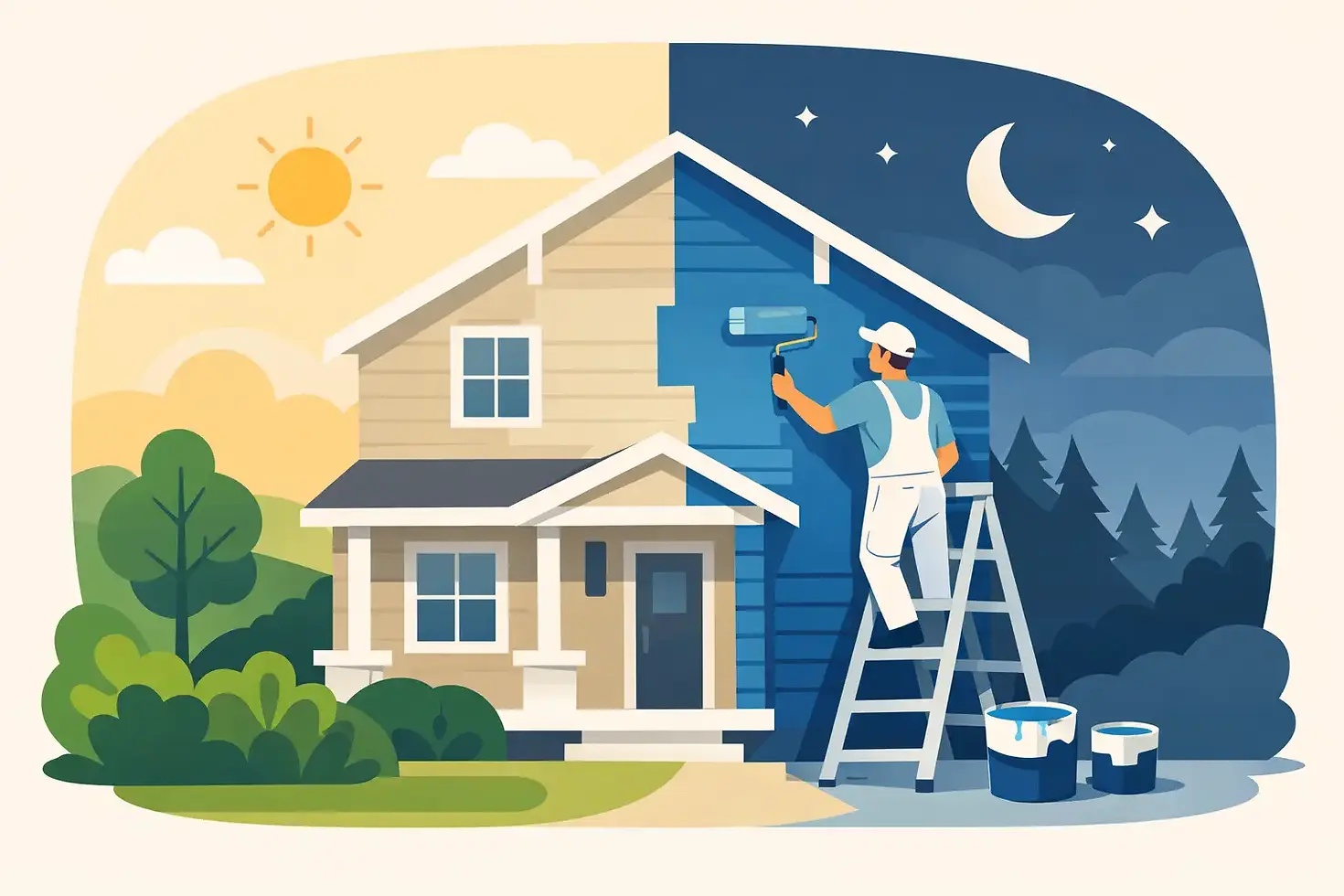
Best Time to Paint House Exterior
If you've ever watched fresh exterior paint bubble, peel, or fade way too soon, the weather was probably part of the problem. The best time to paint house exterior surfaces is not just about picking a free weekend. It comes down to temperature, humidity, sun exposure, and making sure the surface is truly ready so the finish holds up.
For homeowners and property managers in South Carolina and Georgia, timing matters even more. Our climate gives you plenty of painting days, but it also brings heat, moisture, pollen, and surprise rain that can ruin a good-looking job before it has a chance to cure. A paint project should improve your property, not create another maintenance headache.
When is the best time to paint house exterior surfaces?
In most cases, the best window is spring through fall, with mild temperatures and lower chances of steady rain. For many homes in the Southeast, late spring and early fall are the sweet spots because daytime temperatures are warm enough for paint to bond well, while nights usually stay above the minimum temperature recommended by the paint manufacturer.
That said, there is no one-size-fits-all date on the calendar. A house in direct sun will behave differently from one shaded by trees. Older siding, chalky trim, stucco, brick, and previously painted wood all respond differently too. Good timing is really about matching the product, the surface, and the forecast.
Most exterior paints perform best when temperatures stay roughly between 50 and 85 degrees, though some products can handle cooler conditions. What matters is not just the afternoon high. Overnight temperatures count too. If it gets too cool after application, paint can struggle to cure properly, which affects durability and appearance.
Why spring and fall usually work best
Spring gives you a fresh start after winter grime, and it's often a practical time to clean, prep, and repaint before summer heat settles in. In South Carolina and Georgia, spring can be excellent for exterior work if you avoid stretches of heavy rain and high pollen. Pollen may seem like a small issue, but it can settle onto wet paint and leave a gritty finish if the timing is off.
Fall is often one of the most reliable seasons for exterior painting. Temperatures are usually more stable, humidity can be lower, and the intense summer sun starts to back off. That creates better working conditions and helps paint level out more evenly. For many properties, fall offers the cleanest path to a long-lasting result.
Summer is more of a mixed bag. It can absolutely be done, but it requires more care. Paint applied in extreme heat or direct afternoon sun can dry too fast on the surface, which may hurt adhesion and leave lap marks or an uneven sheen. On the other hand, a well-planned summer project with the right start time and shaded work areas can still turn out great.
Winter is the trickiest option. In parts of the Southeast, there are mild winter days that look workable, but the issue is usually nighttime temperature drops and moisture. Even if the afternoon feels comfortable, cool evenings can interfere with curing. That's why winter exterior painting usually depends on short-term weather patterns, product selection, and professional judgment.
Weather matters more than the season
The season gives you a general idea, but the forecast makes the final decision. Dry conditions are key. If rain is expected too soon after application, paint may wash off, streak, or fail to bond. Even when rain does not hit directly, high humidity can slow drying enough to create problems.
A good painting window usually means a few things are lining up at once: mild daytime temperatures, overnight lows within product guidelines, limited wind, and little to no rain for at least a day or two after the work starts. Some products need longer cure times than others, especially on surfaces that hold moisture.
Sun exposure is another factor homeowners often overlook. The front of the house may be shaded in the morning and blazing hot by afternoon, while the back stays cooler longer. That changes how a crew schedules the work. Painting the right side of the home at the right time of day can make a major difference in how the finish looks and lasts.
The best time to paint house exterior in South Carolina and Georgia
In our service area, the best time to paint house exterior surfaces is often between late March and early June, then again from late September through early November. Those ranges are not hard rules, but they tend to offer the most comfortable balance of temperature and moisture.
Late spring is often strong because surfaces are warming up, winter residue can be cleaned away, and you still have a chance to avoid peak summer heat. Early fall also works well because the extreme heat begins to ease, and you can refresh the property before cooler weather and holiday schedules take over.
The toughest stretch is usually mid-summer, especially when temperatures and humidity climb together. That does not mean the project has to wait, only that the crew needs to plan carefully. Early starts, smart sequencing around sun exposure, and close attention to dry times become even more important.
Why prep can change the timeline
Even perfect weather cannot save a surface that was not prepared correctly. Exterior painting is only as good as the prep underneath it. Dirt, mildew, chalky residue, loose paint, and moisture trapped in siding or trim can all shorten the life of the finish.
That is one reason pressure washing often comes first. Once the exterior is cleaned, the surface needs enough time to dry before primer or paint goes on. In humid climates, that drying window can take longer than homeowners expect. Wood trim, especially older wood, may hold moisture below the surface even when it looks dry from the outside.
Repairs matter too. Caulking gaps, replacing damaged boards, scraping peeling areas, sanding rough edges, and priming bare spots are not extras. They are part of getting the job to hold up. If you are trying to figure out the right week to paint, remember that prep work can add time before the first coat ever starts.
Signs it's not the right day to paint
Sometimes the easiest way to protect the project is to wait. If the siding feels damp in the morning and stays that way, if the forecast shows storms, or if the afternoon heat is pushing the surface temperature too high, it may not be the right day.
You also want to be careful after a rainy stretch. Even when skies clear up, surfaces may still carry hidden moisture. Painting too soon can trap that moisture under the coating, which leads to blistering, peeling, or early failure. A trustworthy contractor will tell you when conditions are not right instead of rushing through the work.
Planning ahead saves stress
If you want the best results, do not wait until your paint is badly failing to schedule the job. When peeling, exposed wood, or cracked caulk gets too far along, weather becomes only one part of the problem. Damage underneath can turn a straightforward repaint into a larger repair project.
Planning ahead gives you more flexibility to choose a strong weather window, select colors without rushing, and get any prep work handled the right way. It also helps avoid the peak-season scramble when everyone's trying to book exterior work at once.
For homeowners, landlords, churches, schools, and local businesses, a well-timed paint job does more than improve curb appeal. It helps protect siding, trim, and other exterior surfaces from the wear our climate dishes out year after year. Done right, it should look clean, hold up well, and give you one less thing to worry about.
At A Couple Of Painters, we believe a good exterior paint job starts before the first brush touches the house. It starts with honest timing, solid prep, and a crew that respects your property. If you're thinking about painting this season, the right time is when the weather, the surface, and the plan all line up.


Comments