


Best Cabinet Paint for Kitchens That Lasts
Kitchen cabinets take a beating that most walls never see. Steam, cooking grease, wet hands, grocery bags, and daily door slams can quickly expose a weak paint job. The best cabinet paint for kitchens is not simply the prettiest color on a sample card. It is a durable coating system that bonds tightly, cures hard, cleans easily, and is applied over properly prepared surfaces.
For homeowners across South Carolina and Georgia, that last part matters. Heat and humidity can affect dry times, and a rushed cabinet project can leave behind sticky doors, brush marks, peeling edges, or a finish that chips around handles. Choosing the right paint is important, but prep and application are what give that paint a fair chance to perform.
What Makes Cabinet Paint Different?
Cabinets need a tougher finish than standard interior wall paint. Wall paint is made to look good across broad surfaces and handle occasional cleaning. Cabinet paint has to hold up against repeated contact in a busy room where grease and moisture are part of everyday life.
A quality cabinet coating should level out smoothly, resist yellowing, and cure to a hard surface without becoming brittle. It should also have enough adhesion to grip wood, previously painted cabinets, laminate, or other cabinet materials after the right prep work.
The biggest mistake homeowners make is choosing paint by color alone. A beautiful white in a low-grade paint may look fine at first, then show grime around pulls and chips on drawer corners within months. A cabinet-grade enamel or urethane finish costs more than basic wall paint, but it is built for a much tougher job.
The Best Cabinet Paint for Kitchens Is Usually Urethane or Alkyd
For most occupied homes, waterborne alkyd and urethane trim enamels are the strongest all-around choices. They offer the smooth appearance people expect from painted cabinets while avoiding the heavy odor and long dry times associated with many traditional oil-based products.
Waterborne alkyd enamel
Waterborne alkyd paint is a good fit when you want a classic painted-cabinet look with good leveling. It typically dries faster than oil paint and has a lower odor, which makes it more practical for homes where the kitchen is still in use. Once fully cured, it provides a durable, washable finish that works well on wood cabinets and properly primed painted surfaces.
The trade-off is patience. Waterborne alkyd paint can feel dry before it is fully cured. Cabinet doors should not be put back into heavy service too soon, especially in humid weather. A professional crew plans around that cure time rather than treating dry-to-the-touch as ready-for-everything.
Urethane trim enamel
Urethane-modified enamel is often the best choice for kitchens that see a lot of traffic. It is designed for trim, doors, and cabinets, so it generally offers strong resistance to scuffs, cleaning, and everyday wear. It can also produce a smooth finish when sprayed or carefully brushed and rolled.
This is a dependable option for families, rental properties, and commercial break rooms where cabinet doors and drawers get opened all day. It is not magic, though. Even a premium urethane paint can fail if it is applied over grease, loose old paint, or slick laminate without the correct bonding primer.
Professional sprayed cabinet coatings
For homeowners seeking a factory-style finish, professional-grade sprayed coatings may be the right answer. These systems can include catalyzed coatings that cure extremely hard and provide excellent durability. They are especially useful on large kitchen projects, high-end cabinetry, or cabinets with a lot of detailed door profiles.
These products and application methods are not ideal for a casual weekend project. Proper ventilation, spray equipment, masking, surface preparation, and safe handling are part of the process. The finish can be outstanding, but only when the crew has the training and setup to use the coating correctly.
Pick the Right Sheen for a Working Kitchen
Paint sheen changes both the look and the maintenance needs of your cabinets. Most kitchen cabinets look best in satin or semi-gloss.
Satin offers a soft, low-shine finish that feels current and hides minor surface imperfections better than glossier options. It is a popular choice for modern kitchens, earthy colors, and homes where a calm, understated look is the goal.
Semi-gloss has more shine and is easier to wipe down, which makes it a practical option around cooking areas. It reflects more light and can help a smaller kitchen feel brighter. On the other hand, semi-gloss also highlights dents, grain texture, and uneven prep more readily.
High-gloss cabinets can look sharp in the right space, but they are less forgiving. Every fingerprint and surface flaw has a way of showing up. Unless the cabinets are in excellent condition and the application is very controlled, satin or semi-gloss is usually the safer choice.
The Paint Must Match the Cabinet Material
Before choosing a product, identify what your cabinets are made of. Solid wood, wood veneer, MDF, laminate, and thermofoil cabinets do not all accept paint the same way.
Wood cabinets are generally the most straightforward to repaint, although oak and other open-grain woods may need grain filling if you want a smooth, modern finish. MDF can paint beautifully, but exposed edges need special attention because they absorb moisture and paint quickly.
Laminate cabinets require a little more care. Their slick surface needs thorough cleaning, scuff sanding, and a bonding primer designed for hard-to-stick surfaces. Skipping the primer may save a day at the beginning, but it can lead to peeling paint around handles and door edges later.
Thermofoil can be more complicated. If the coating is lifting, cracking, or separating from the doors, paint alone may not be a long-term fix. In some cases, replacing door fronts is the wiser investment. A trustworthy painter should be willing to say when a cabinet surface is not a good candidate for refinishing.
Prep Work Decides Whether Paint Stays Put
The best cabinet paint for kitchens will not cover up poor preparation. Kitchen cabinets collect an invisible layer of grease and cleaning residue, even when they look clean. That residue has to be removed before sanding, priming, or painting begins.
A proper cabinet painting process starts with removing hardware and labeling doors and drawers so everything returns to the right place. Surfaces are cleaned with a degreasing cleaner, then sanded enough to dull the existing finish and create a surface the primer can grip. Any dents, scratches, gaps, or damaged corners should be repaired before primer goes on.
Primer is not optional when cabinets are bare wood, stained, laminate, repaired, or changing from a dark color to a light one. The right primer improves adhesion and blocks stains or wood tannins that can bleed through lighter paint colors. After priming, a light sanding helps create the smooth base that makes the finish coat look professional.
Rushing through these steps is how cabinet jobs become disappointing. The paint itself may be excellent, but it cannot bond well to grease, gloss, or failing old coatings.
Brush, Roller, or Spray Application?
Spraying typically creates the smoothest finish, particularly on cabinet doors and drawer fronts. It lays down an even coat without roller texture and helps detailed door profiles look clean. The downside is that spraying requires serious protection for floors, counters, appliances, and nearby rooms.
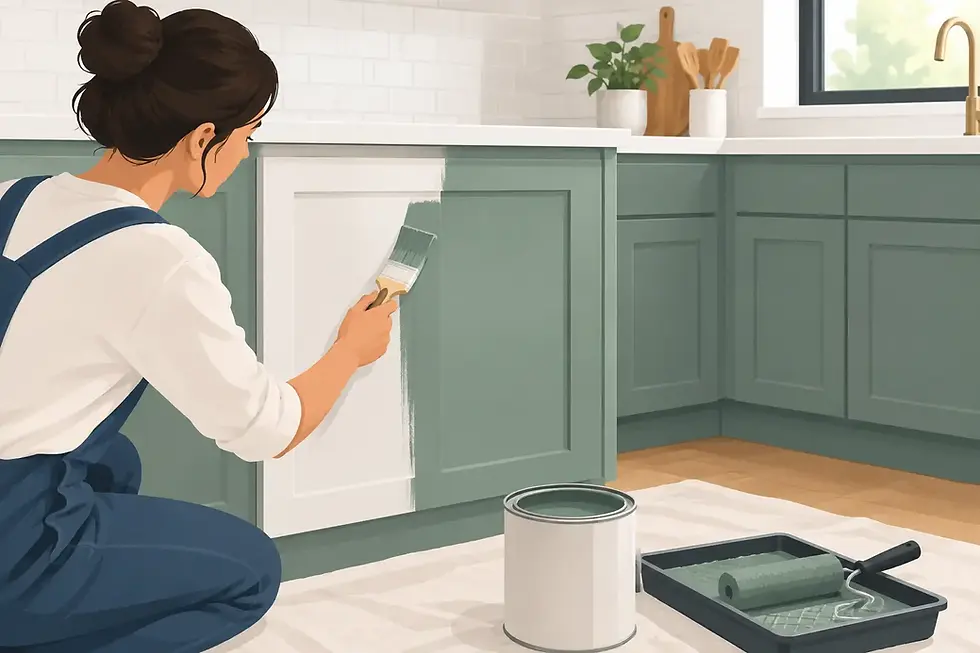
Brushing and rolling can still produce attractive results when done carefully with quality tools and a paint designed to level. This approach can be practical for cabinet boxes that stay in place, while doors and drawers may be sprayed in a controlled work area. The right method depends on the kitchen layout, the condition of the cabinets, and how much disruption the household can handle.
A professional job also means applying thin, even coats rather than trying to cover everything with one heavy pass. Two finish coats over the correct primer are common. Heavy coats take longer to dry, are more likely to sag, and can leave doors sticking together after reinstallation.
Give Freshly Painted Cabinets Time to Cure
Fresh paint needs protection, especially during its first few weeks. You can often reinstall doors and use the kitchen carefully after the paint has dried according to the product directions, but full hardness takes longer.
Avoid aggressive scrubbing, slamming doors, hanging damp towels over cabinet doors, or placing adhesive bumpers on soft paint too soon. Use mild soap and water for cleaning once the finish has cured, and skip abrasive pads or harsh degreasers that can dull the sheen.
If your cabinets are worn, dated, or hard to clean, the right coating can make the entire kitchen feel new without the cost and disruption of a full replacement. A Couple Of Painters, LLC helps homeowners choose a finish that fits the cabinet material, the kitchen’s workload, and the look they want, then completes the work with clean, respectful job-site practices. A well-painted cabinet should make your kitchen easier to enjoy every single day.


Comments